

 Listen to the full BFM conversation
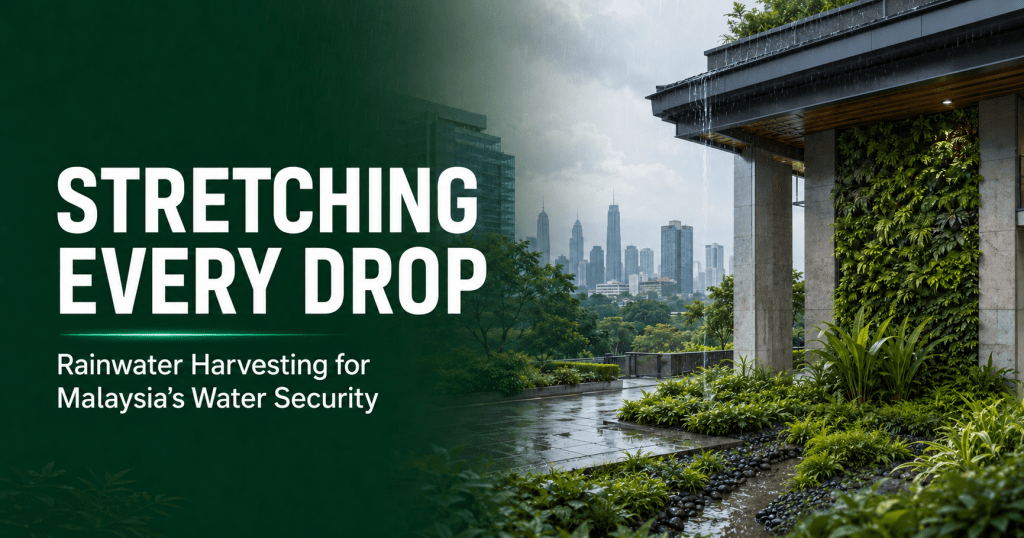
“Stretching Every Drop: Rainwater Harvesting” provides a concise introduction to why Malaysia should not take abundant rainfall for granted and how rainwater harvesting can support future water security.
Listen to Dr Chee Chung Yee, Technical Director of BACFREE, on BFM 89.9:
Why should a water-rich country plan for scarcity?
Malaysia receives abundant rainfall, yet plentiful rain does not automatically guarantee uninterrupted water availability. Changing weather patterns, growing cities, expanding developments and rising demand can place pressure on water resources and infrastructure. For businesses and property stakeholders, water security is therefore becoming a matter of operational resilience—not simply an environmental topic.
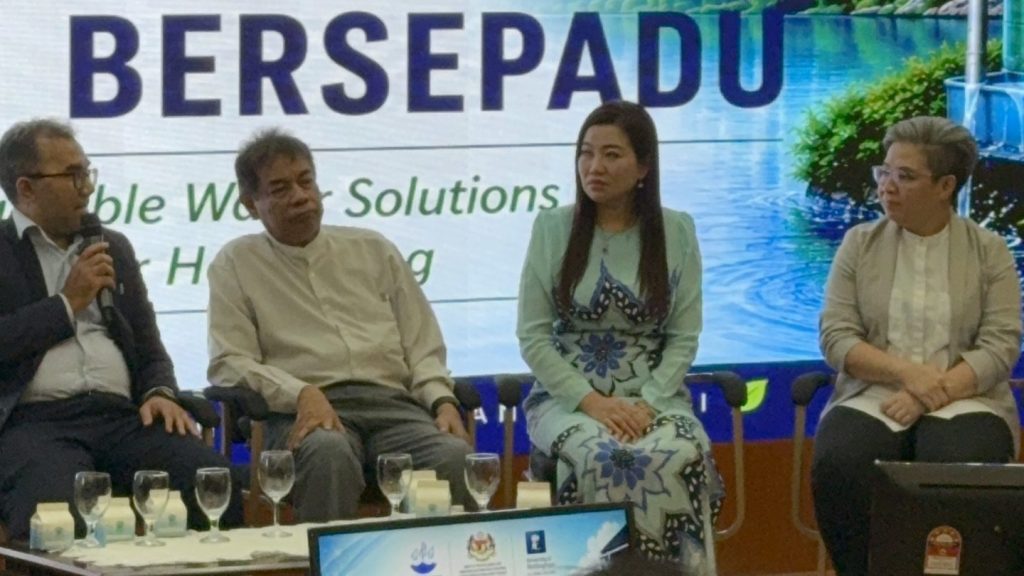
This is the central question explored in BFM 89.9’s People, Planet, Profit episode, “Stretching Every Drop: Rainwater Harvesting”. In the 22-minute conversation, broadcast on 27 July 2026, Dr Chee Chung Yee, Technical Director of BACFREE, discusses rainwater harvesting as a proactive strategy to help businesses and households prepare for potential water scarcity.
For developers, architects, consultants, building managers and business leaders, the discussion offers a useful starting point: if rain is already falling on our buildings, how can we capture and use more of it responsibly?
What is a rainwater harvesting system?
A rainwater harvesting system collects rainfall—normally from a building’s roof or another suitable catchment area—and directs it through a controlled system for storage and later use. A properly designed solution may include gutters or collection points, pre-filtration, storage tanks, pumps or gravity-fed distribution, overflow control and the pipework required for its intended applications.
Harvested rainwater is commonly used for non-potable purposes, meaning uses that do not require drinking-water quality. Depending on the building and system design, these may include:
- Toilet flushing in residential, commercial or institutional buildings
- Landscape irrigation and general external cleaning
- Vehicle washing and selected facility-maintenance activities
- Other project-specific non-potable applications assessed by qualified professionals
A rainwater harvesting system in Malaysia should not be treated as a one-size-fits-all product. Its catchment area, storage capacity, filtration, water demand, rainfall pattern, available space, plumbing configuration and maintenance requirements must work together as one practical system.
Why the conversation matters to Malaysian projects
Water is essential to nearly every building, but its strategic value is often noticed only when supply is interrupted or operating costs rise. Planning for alternative water sources at the design stage can give project teams more options than trying to retrofit a solution after construction.
For developers and architects, rainwater harvesting can be considered alongside the building layout, roof catchment, plant-room planning and overall sustainability strategy. Consultants can assess expected demand and integrate the required mechanical and plumbing provisions. Building managers can consider whether an existing property has suitable space, catchment and usage patterns for a retrofit. C-level leaders can evaluate the system as part of wider risk management and ESG planning.
The broader value is not simply collecting rain. It is about using potable water more purposefully. When suitable non-potable demand is served by harvested rainwater, treated mains water can be conserved for applications that truly require it.
Key considerations before selecting a system
The podcast introduces rainwater harvesting as a water-security strategy. Turning that strategy into a successful project requires careful technical assessment. Decision-makers should begin with five questions:
- How much suitable roof or catchment area is available?
- Which non-potable uses create a consistent demand for harvested water?
- How should storage be sized against rainfall patterns and actual consumption?
- Where will filtration, storage, pumps, controls and overflow discharge be located?
- Who will inspect and maintain the system after handover?
An oversized system may occupy valuable space without delivering proportionate use, while an undersized or poorly integrated system may miss opportunities to reduce mains-water demand. Early involvement from an experienced water-solutions team can help align the system with project goals, site constraints and long-term operation.
From sustainability statement to measurable action
Many organisations now publish sustainability commitments, but stakeholders increasingly expect visible and practical action. Rainwater harvesting can form part of that response because it connects resource conservation with the day-to-day operation of a building.
For a new development, the opportunity begins during planning and specification. For an existing property, it begins with a feasibility assessment. In both situations, the most meaningful outcome comes from designing around actual water demand and ensuring the installed system remains useful, accessible and maintainable throughout the building’s life.
This is particularly relevant to organisations reviewing climate resilience, water efficiency, green-building ambitions or ESG priorities. A well-considered system can demonstrate that water management has moved beyond a policy statement and into physical building infrastructure.
Planning a rainwater harvesting system in Malaysia?
If you are planning a new development, upgrading an existing building or reviewing your organisation’s water-security strategy, BACFREE can help assess the site requirements and recommend an appropriate rainwater harvesting solution.
Speak with our team on WhatsApp @+60 10-968 8290.
Share your project type, location and estimated water requirements, and our team will guide you on the next step.